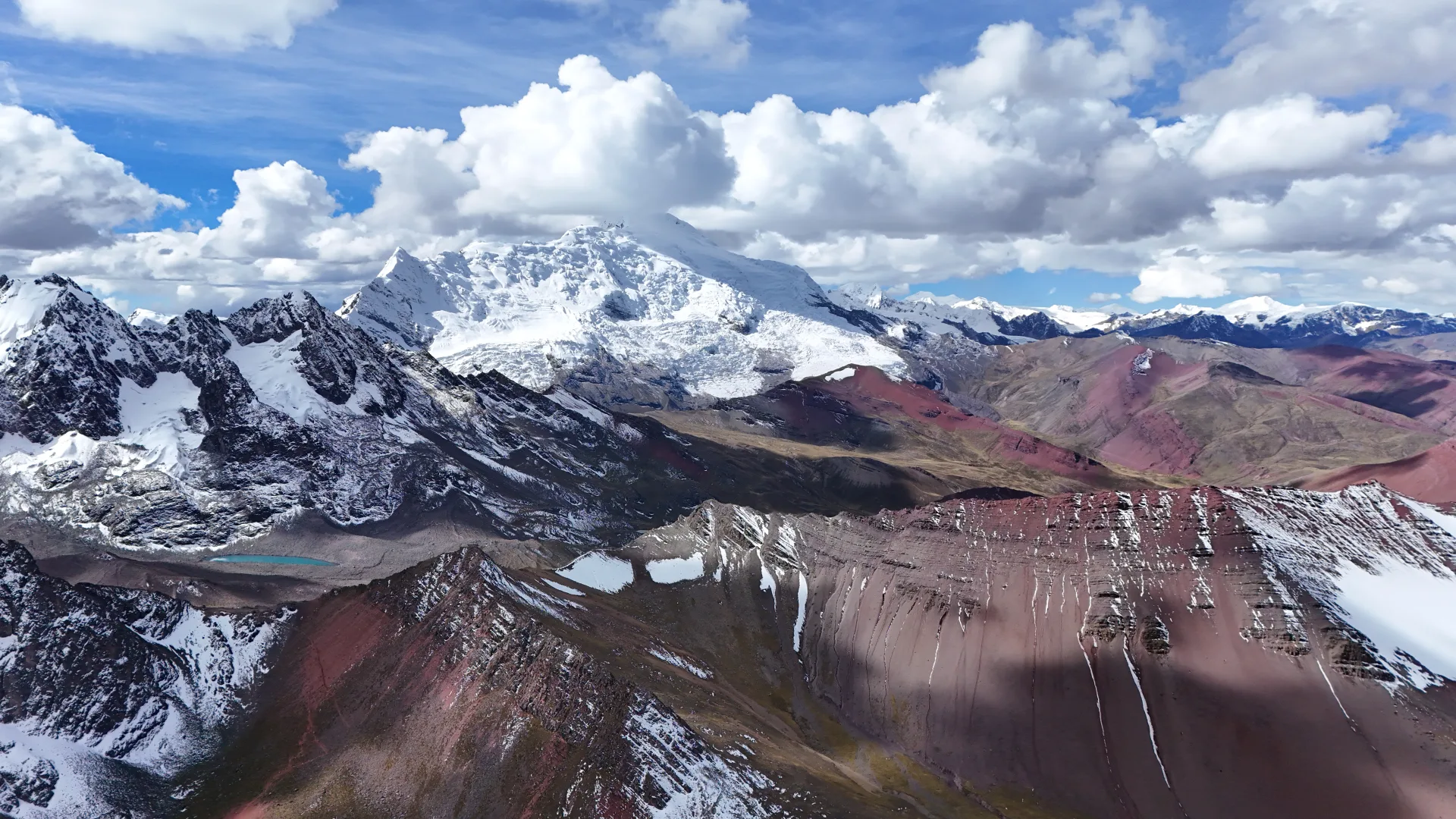
Ausangate, at 6,384 metres, is Cusco’s highest mountain and its main apu, the sacred mountain that still receives offerings. On its north face, above the community of Pacchanta, a one-day circuit links seven glacial lakes of different colours, with the snow peak and its glaciers above. It is the most complete day hike in the region, and one of the least crowded. This guide explains what it is like, who it suits and how to prepare.
Where it is and how to get there
Pacchanta is about three and a half hours from Cusco, on the south-eastern road through Ocongate and Tinki. There is no practical public transport for a same-day return, so it is done on a tour. Our private 7 Lakes tour leaves at 3:30 in the morning, with breakfast on the way, and returns to Cusco at nightfall, in about fourteen hours.
The circuit
| Detail | Value |
|---|---|
| Start and finish | Pacchanta, at 4,300 m |
| Distance | About 12 km, circular |
| Walking time | 4 to 5 hours |
| Highest point | Close to 4,800 m |
| Terrain | High-plateau trails with gentle climbs |
| Difficulty | Demanding because of altitude and length, not technique |
The trail climbs through grassland where alpaca herds graze and links the lakes, each with its own colour: turquoise, green, dark blue or reddish, depending on the minerals and depth. Above you, all the time, are the Ausangate glaciers. The guide adapts the route to the group’s pace and, if the weather calls for it, prioritises the most spectacular lakes.
The Pacchanta hot springs
Back in the village comes the best possible end to a high-altitude hike: the community’s open-air hot spring pools, with the snow peak behind. Access is included on our tour. Bring a swimsuit and towel.
Who it suits
Hikers in good shape who have spent at least three days in Cusco. There are no difficult sections, but you walk for four or five hours above 4,300 metres, some 900 metres higher than Cusco (Cusco altitude and every destination). If someone in the group needs a shorter day, on a private tour you can do just the main lakes. Community horses can also be hired in Pacchanta for part of the circuit.
If you want something shorter, Humantay Lake is a single lake with an hour and a half of climbing. If it is the coloured landscape you are after, see Vinicunca or Palcoyo. The 7 Lakes are for those who would rather walk more and meet fewer people.
When to go
May to October, with clear skies and the peak in view. In the rainy season, December to March, the trail gets muddy, it can snow and clouds hide the mountain for much of the day. Mornings are always very cold: at that altitude, below freezing at dawn.
What to bring
- Waterproof trekking shoes and spare socks.
- Warm layers, a windbreaker, gloves and a hat.
- High-factor sunscreen, sunglasses and a cap.
- Two litres of water and snacks for the trail.
- A swimsuit and towel for the hot springs.
Trekking poles and emergency oxygen are included. The full mountain list is in what to pack, and how to prepare for altitude in the acclimatisation guide.
Another high hike with very few people is Waqrapukara, in Acomayo: here the reward is not lakes but an archaeological site on the edge of the Apurímac canyon.
Frequently asked questions
How much walking is there at the Ausangate 7 Lakes?
About twelve kilometres in four or five hours, between 4,300 and 4,800 metres.
Is it harder than Rainbow Mountain?
It is longer, but does not climb as high. It demands more stamina and less adaptation to extreme altitude.
Is there an entrance fee?
On our tour there is no separate community fee and access to the hot springs is included.
Can you do it without acclimatising?
It is not advisable. Spend at least three days in Cusco beforehand.
Do you always see all seven lakes?
It depends on the weather and pace. The full circuit passes all seven; if needed, the most spectacular ones are prioritised.
Book
- Ausangate 7 Lakes, private tour.
- All Ausangate tours.
- Humantay or Rainbow Mountain, if you are weighing other options.