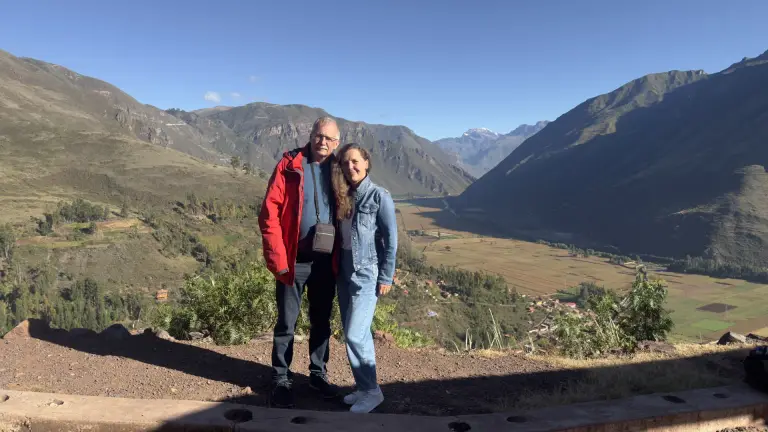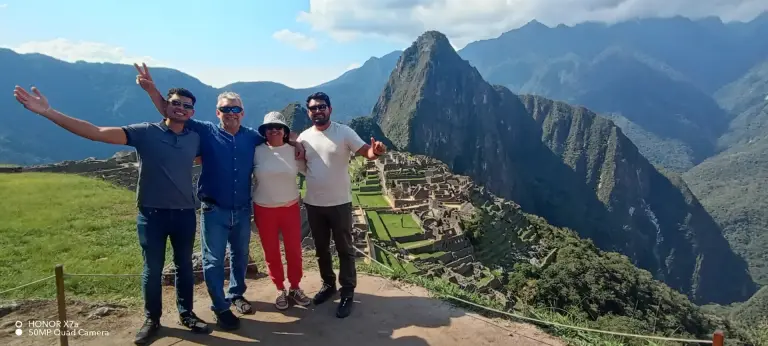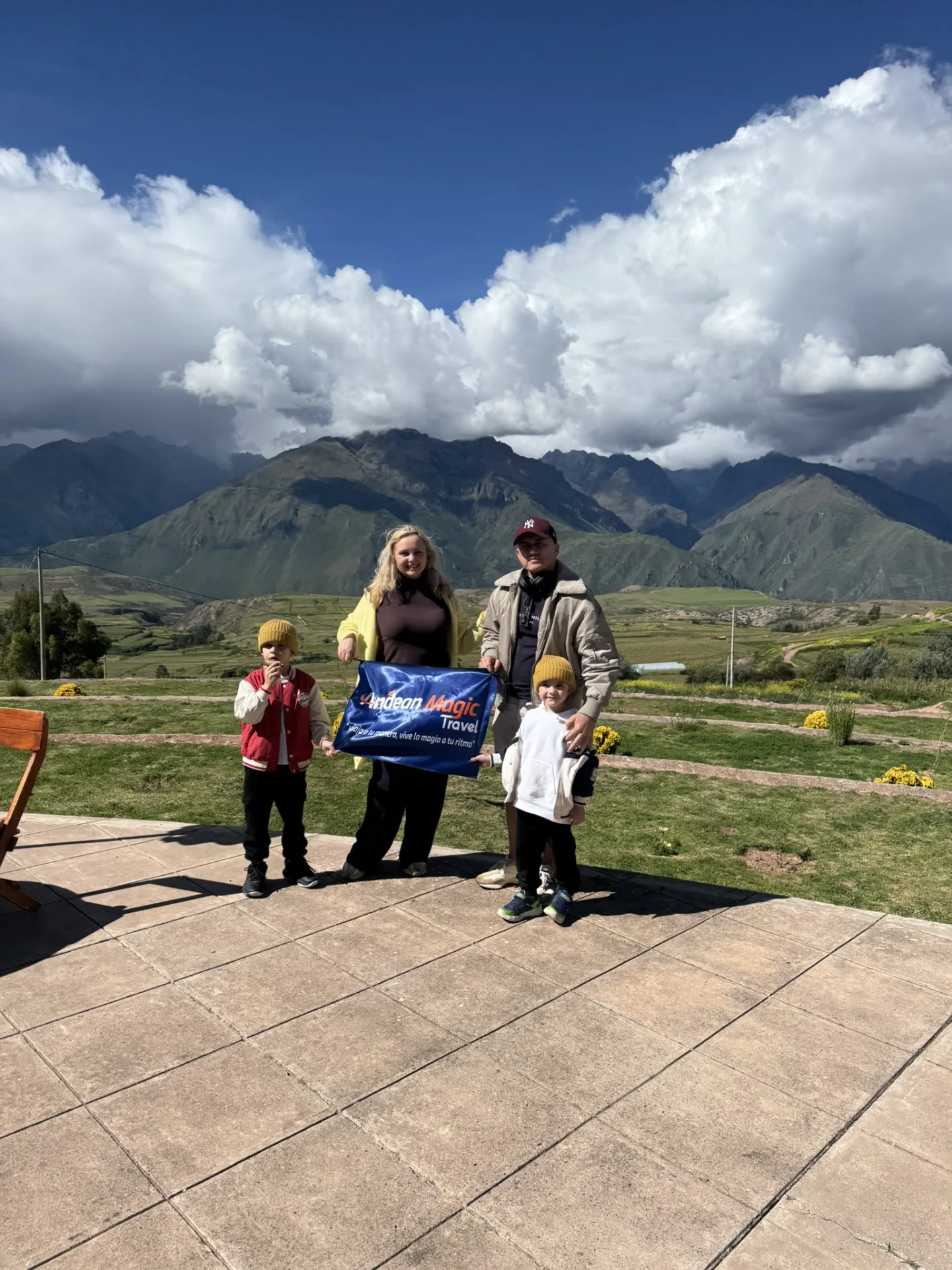

The Sacred Valley with children is, despite appearances, the easiest day of a trip to Cusco: it lies 500 metres below the city, the visits are short and outdoors, and there are llamas, salt, markets and ruins to climb on. The difficulty is in the logistics, not the destination: hours in the vehicle, high-altitude sun, meals at odd hours and stone stairs. This guide sorts all of that out so the day works at any age, from babies to teenagers.
Which route to choose with children
Of the two one-day routes, the VIP via Chinchero, Moray and the Maras Salt Mines works better with children than the classic via Pisac. The reasons are concrete:
- The walks are short and flat: the rim of Moray, the salt mine viewpoints. Pisac has uneven stairs and slopes.
- The salt mines are the place that grips a child most in the whole valley: three thousand pools, people at work, salt you can touch and buy.
- The day is an hour shorter and ends earlier.
- Chinchero comes first thing, when there is still energy, and then it is all downhill.
If your children are over ten and can handle stairs, the classic adds the Pisac market and a fortress, Ollantaytambo, which they will love climbing. With teenagers, either one. We compare them in detail here: Classic or VIP.
What they enjoy most, by age
| Age | Works | Better avoided |
|---|---|---|
| 0 to 3 | Short drives, a baby carrier, shade at Moray, the llamas at Awana Kancha on the Pisac road | Going down to the floor of Moray, the Pisac stairs, days over 8 hours |
| 4 to 9 | The salt mines, touching the wool in Chinchero, the market, the water channels of Ollantaytambo | Long explanations at each stop; a guide who adapts them helps |
| 10 to 14 | Climbing the Ollantaytambo fortress, Pinkuylluna, going down into Moray, the Pisac tunnel | Not much |
| Teenagers | Everything; the history interests them if the guide tells battles, not dates | Departures before seven |
Altitude: the valley’s advantage
Children acclimatise like adults, but find it harder to say what they feel. The valley helps because it is lower: Urubamba at 2,870 metres, Ollantaytambo at 2,792, against Cusco’s 3,400. A good plan is to give the second day in Cusco to the valley and, if possible, sleep in Urubamba or Ollantaytambo for the first nights. What to avoid on day one is Chinchero late in the afternoon and any climb on foot. More detail in the acclimatisation guide.
Logistics that make the difference
- Car seat. Not compulsory in Peru for tourist vehicles, but we fit one if you ask when booking. Say so two days ahead.
- Pace. On a private tour the schedule is yours: a nap in the vehicle, an extra stop, half an hour longer at the salt mines. In a group of forty that option does not exist.
- Sun. At 3,000 metres children burn in twenty minutes. Cap, sunglasses, high-factor sunscreen and reapply after lunch.
- Food. The tour lunch is in Urubamba, between one and two. Bring fruit and biscuits for the morning; there is nowhere to buy at Moray or the salt mines.
- Toilets. At every stop, paid (one sol) at some. Carry coins and paper.
- Tickets. Children under ten do not pay the Tourist Ticket; show their ID. The salt mines charge everyone, about 10 soles.
A typical day with children
- 8:00 Leave Cusco after an unhurried breakfast.
- 9:00 Chinchero: weaving demonstration, touching the wool, seeing the dyes. Half an hour.
- 10:15 Moray: walk around the rim; older children go down to the floor if they want.
- 11:30 Maras Salt Mines: the star stop. Buy salt.
- 13:00 Lunch in Urubamba, unhurried.
- 15:00 Ollantaytambo: the fortress for those who want to climb; the town and its channels for the little ones.
- 17:00 Return. Back in Cusco around 18:30.
With young children, the short Chinchero, Maras and Moray tour, about seven hours, is less tiring than a full day; and on the Chinchero cultural experience they see up close how wool is washed, dyed and woven.
Frequently asked questions
From what age can you do the Sacred Valley?
From babies, with a carrier and an adapted pace. What to avoid with under-threes are days over eight hours; the seven-hour Chinchero, Maras and Moray route is better.
Do children pay entrance fees?
Children under ten do not pay the Tourist Ticket. At the salt mines everyone pays.
Is there a child discount on the tour?
The tours are private, priced per person according to group size. Write to us with the ages and we adjust the rate.
What if a child gets carsick?
The Chinchero road has bends. Seat them at the front or in the first row, window slightly open, and stop whenever needed: on a private tour you can.
Book the day
- Sacred Valley VIP, the route that works best with children.
- Chinchero, Maras and Moray, the short seven-hour version.
- All our Sacred Valley tours.