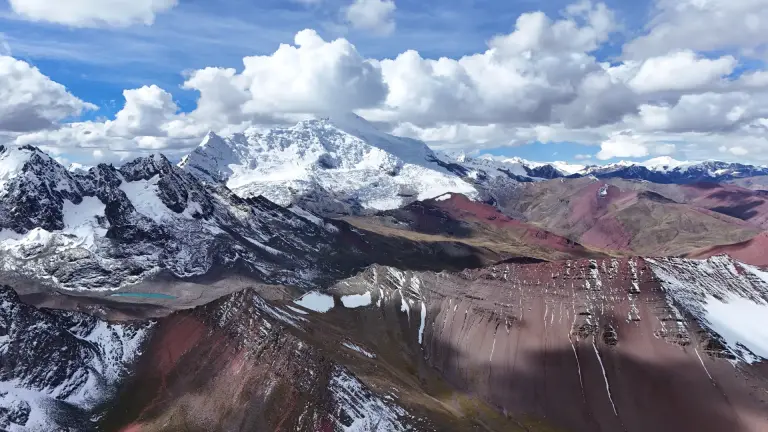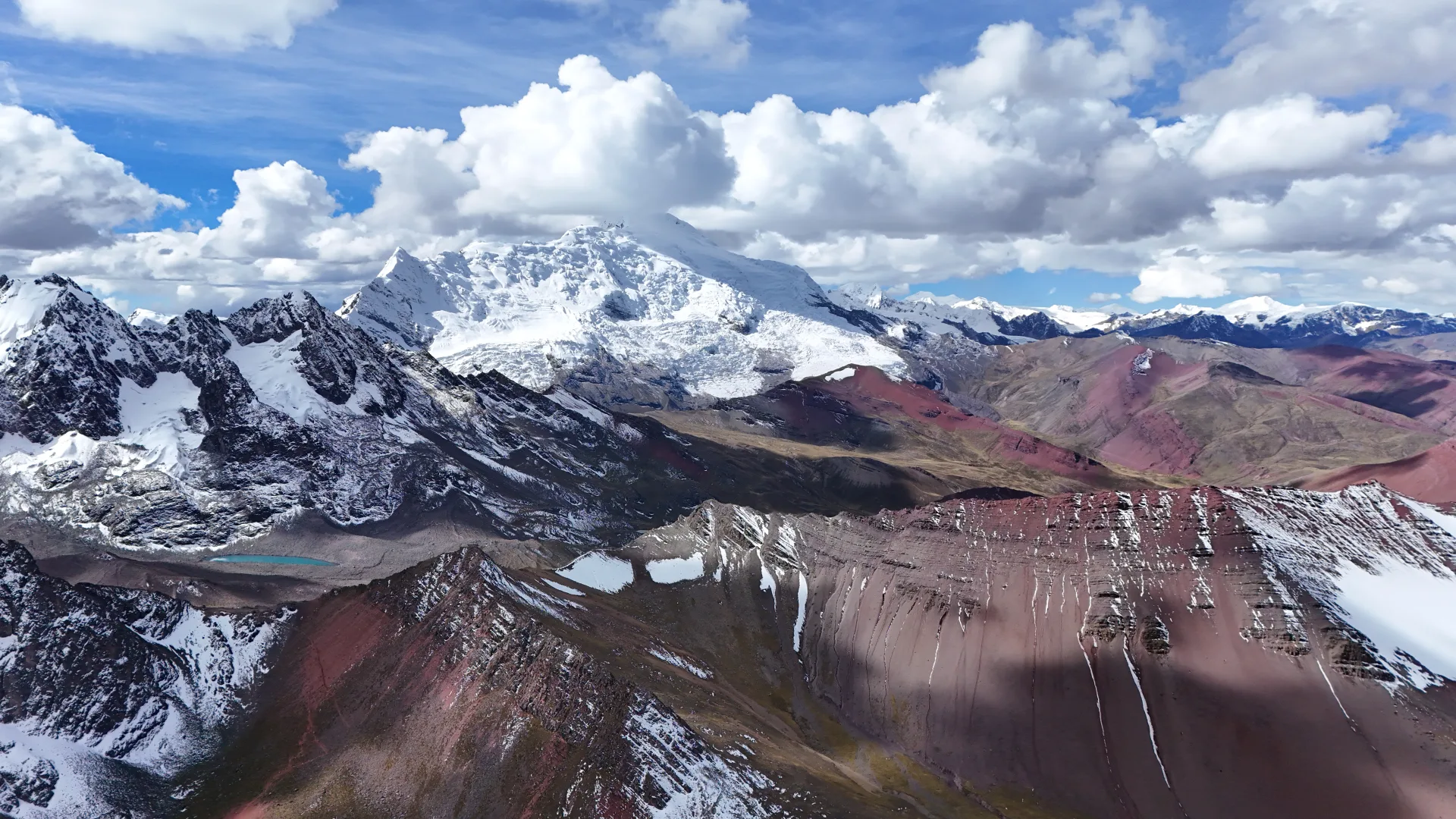
The Ausangate trek is the multi-day circuit around the highest mountain in Cusco, the Ausangate peak, at 6,384 metres. It takes four or five days, starts at Tinki and ends at Pacchanta, and crosses several passes above 4,700 metres, the highest at about 5,100. The whole route stays above 4,000 metres, among glaciers, coloured lakes and alpaca-herding communities, with no roads or hotels along the way. It is a demanding trek with very few people on it. Here are the route, the difficulty, when to go and how it compares with the 7 Lakes and the Salkantay trek.
Ausangate, the sacred mountain of Cusco
Ausangate is the highest summit in the region and in the Vilcanota range, about 100 kilometres southeast of Cusco. It is the main apu of Cusco: the surrounding communities still make offerings to it. About 20 kilometres north of the peak, the Qoyllur Rit’i pilgrimage gathers thousands of people every year, one week before Corpus Christi. More about the area on the Ausangate page.
The route day by day
The classic circuit is hiked anticlockwise, which is slightly less demanding:
| Day | Section | What you will see |
|---|---|---|
| 1 | Cusco – Tinki – Upis | About three hours by road to Tinki and a first hike to the Upis camp, at the foot of the peak |
| 2 | Upis – Arapa pass (about 4,700 m) – Ausangatecocha | The first high pass, coloured lakes and a camp beside the glacial lake of Ausangate |
| 3 | Ausangatecocha – Palomani pass (about 5,100 m) – Qampa | The hardest day: the highest point of the circuit, right by the glaciers |
| 4 | Qampa – Jampa pass (about 5,000 m) – Pacchanta – Cusco | The last pass, the descent to Pacchanta, hot springs and the return to Cusco |
The five-day version spreads the same sections at a calmer pace. The total distance ranges from about 50 to 70 kilometres depending on the variant, and pass heights vary by a few metres depending on the source. Some versions add Rainbow Mountain, which is in the same range.
Difficulty and altitude
It is more demanding than the Salkantay trek: it never drops below 4,000 metres, crosses three or four passes above 4,700 and always sleeps at altitude, with nights below freezing. There are no technical sections, but you need good fitness and to be well acclimatised: ideally spend at least three or four days in Cusco first and do a high-altitude excursion beforehand, such as the 7 Lakes or Rainbow Mountain. How to plan those days is in the acclimatisation guide.
There are no shops or serviced huts along the way: you camp, and the communities charge small passage and camping fees. That is why it is usually done with pack horses or llamas, a cook and a guide.
Ausangate, 7 Lakes or Salkantay
| Ausangate trek | 7 Lakes | Salkantay | |
|---|---|---|---|
| Duration | 4–5 days | 1 day | 4–5 days |
| Highest point | About 5,100 m | Close to 4,800 m | 4,630 m |
| Where you sleep | Always above 4,000 m | In Cusco | Down to the cloud forest |
| Ends at | Pacchanta and back to Cusco | Pacchanta | Machu Picchu |
| Crowds | Very few people | Few | Busier |
If you want the Ausangate scenery in a single day, the 7 Lakes hike covers its north face from Pacchanta. If you would rather finish at Machu Picchu, choose the Salkantay trek.
When to go
In the dry season, from May to September: clear skies, the peak in view and dry trails, though with the coldest nights. From November to March it rains, the passes can get snow and clouds cover the mountain for much of the day. At this altitude the weather changes quickly in any month. The weather for each season is in Cusco in June, July and August and the best time to visit Cusco guide.
What to pack
Proper warm clothing for nights below freezing, a waterproof and windproof jacket, hat, gloves, worn-in hiking boots, high-factor sunscreen, sunglasses, a swimsuit for the Pacchanta hot springs and cash in soles for the community fees. The full mountain list is in what to pack for Rainbow Mountain and the general one in what to pack for Cusco.
How we organise it
We organise the Ausangate trek privately and to measure: we choose the four- or five-day version and the dates with you, with guide, transport, camping and pack animals. The price is quoted according to the version, the dates and the size of the group. If you do not have that many days, the Ausangate 7 Lakes day tour is the best way to get to know the mountain.
Frequently asked questions
How many days is the Ausangate trek?
Four or five days, from Tinki to Pacchanta. Shorter versions are usually day hikes, such as the 7 Lakes.
What is the highest point of the Ausangate trek?
Palomani pass, at about 5,100 metres. The Ausangate peak itself is 6,384 metres high.
Is it harder than the Salkantay trek?
Yes, because of the altitude: the Ausangate trek never drops below 4,000 metres and its highest pass is around 5,100, against 4,630 on the Salkantay.
What is the best time to do it?
From May to September, in the dry season. From November to March it rains and the passes can get snow.
Is there an entrance fee?
There is no single ticket: the communities along the way charge small passage and camping fees, in cash.
Can you see Ausangate in one day?
Yes, on the 7 Lakes hike from Pacchanta: about 12 kilometres along the north face of the peak, with hot springs at the end.
Message us on WhatsApp with your dates and we will propose a tailor-made Ausangate trek.