The Salkantay trek is the great alternative to the Inca Trail for reaching Machu Picchu on foot. It covers about 70 kilometres in five days: you start at Soraypampa, at the foot of the Salkantay peak, cross a pass at 4,630 metres and descend into the cloud forest to reach Aguas Calientes and visit Machu Picchu on the last day. It needs no permit and has no daily quota, so you book weeks rather than months ahead. In exchange, it is more demanding because of the height of the pass. Here are the route day by day, the difficulty, when to go and how it differs from the Inca Trail.
Salkantay, the mountain
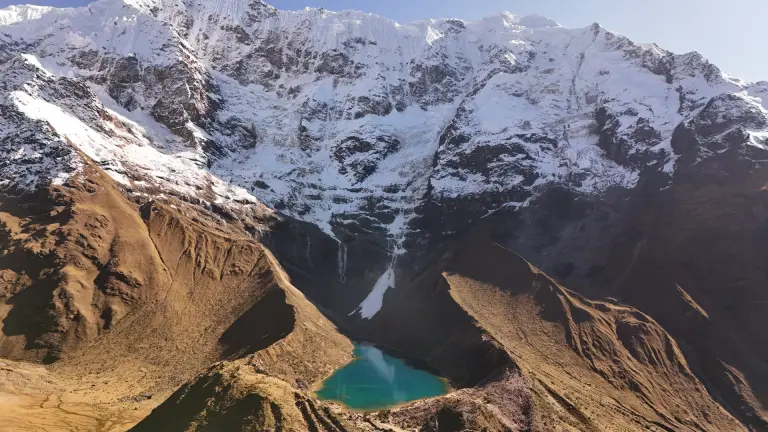
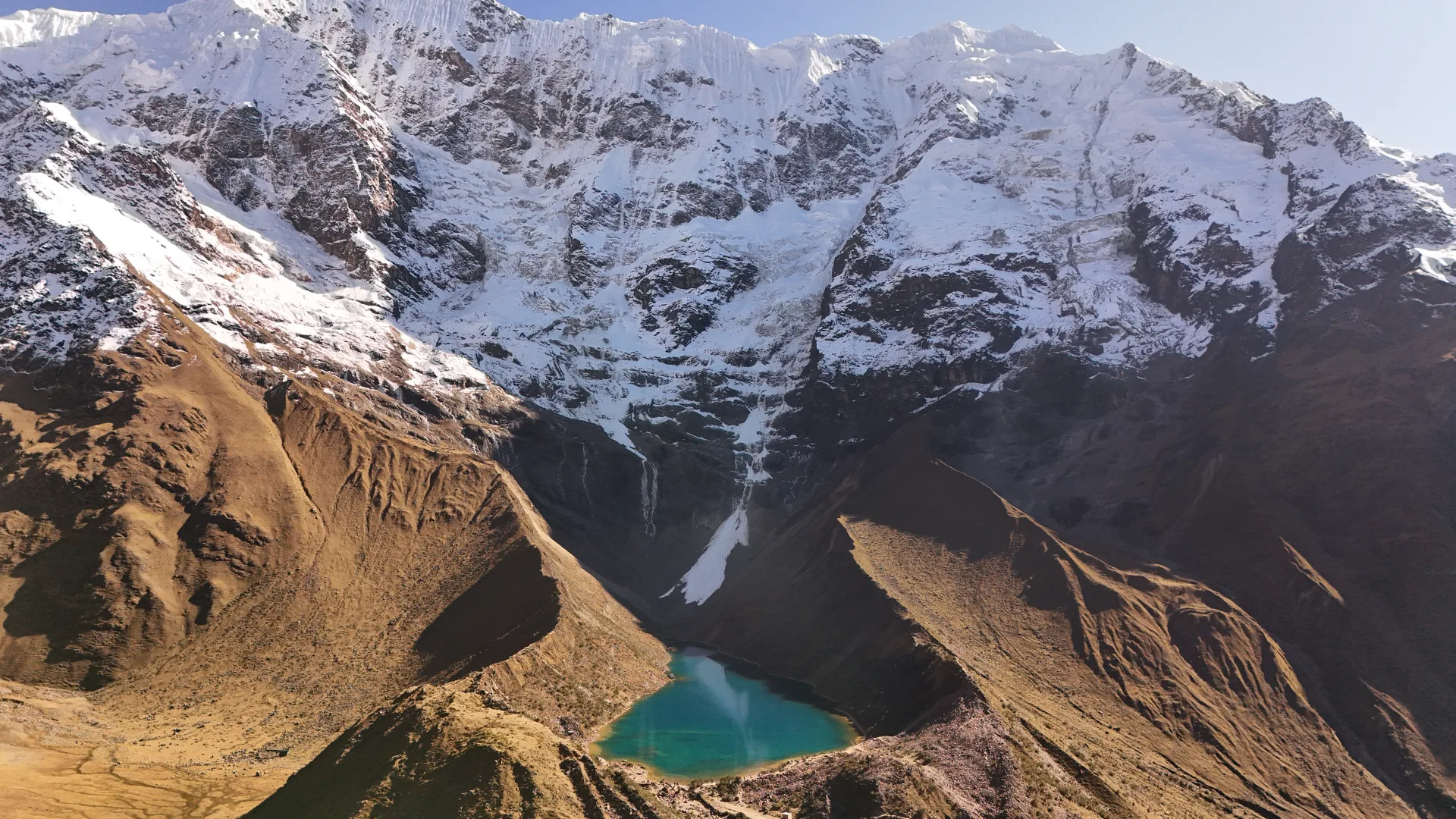
Salkantay is the highest peak in the Vilcabamba range, at 6,271 metres, about 60 kilometres west-northwest of Cusco. It is one of the sacred mountains of the region and was first climbed in 1952. The trek does not go to the summit: it passes at its foot over the Salkantay pass.
The route day by day
| Day | Section | What you will see |
|---|---|---|
| 1 | Cusco – Mollepata – Soraypampa (about 3,900 m) | Hike up to Humantay Lake, at 4,200 metres, and a night at Soraypampa, at the foot of the peak |
| 2 | Soraypampa – Salkantay pass (4,630 m) – Collpapampa (about 2,900 m) | The hardest day: climb to the pass below the glacier and a long descent into the valley |
| 3 | Collpapampa – La Playa | Down the valley towards the cloud forest, with more vegetation and more warmth |
| 4 | La Playa – Llactapata – Hidroeléctrica – Aguas Calientes | The Llactapata ruins, with Machu Picchu in the distance, and the final stretch on foot beside the railway |
| 5 | Machu Picchu and return to Cusco | Visit to the citadel, train to Ollantaytambo and vehicle to Cusco |
Each operator adjusts the sections and campsites, and the four-day version combines days three and four. Day one matches our Humantay Lake excursion: we cover it in detail in the Humantay Lake guide.
Difficulty and altitude
The difficulty is not the distance but the altitude. On day two you climb to 4,630 metres, higher than Dead Woman’s Pass on the Inca Trail, at 4,215. So arrive with at least two or three days in Cusco and, if you can, a high-altitude excursion beforehand. How to plan those days is in the acclimatisation guide, and the altitude of each place in the Cusco altitude guide.
On day two alone you descend more than 1,700 metres, from the pass to Collpapampa: your knees feel it more than your lungs. Trekking poles help a lot on the descents.
Salkantay or the Inca Trail
| Salkantay | Classic Inca Trail | |
|---|---|---|
| Duration | 5 days, about 70 km (or 4 days) | 4 days, 43 km |
| Highest point | 4,630 m | 4,215 m |
| Permit | Not needed; no daily quota | Quota-based; sells out months ahead |
| February | No maintenance closure, though it is the middle of the rainy season | Closed for maintenance |
| Arrival at Machu Picchu | Via Aguas Calientes, on the last day | On foot through the Sun Gate |
| Highlights | High-mountain scenery, glaciers and cloud forest | Inca archaeological sites along the way |
Both routes, together with the train and the Hidroeléctrica route, are compared in how to get to Machu Picchu.
When to go
The best time is the dry season, from May to September, with clear skies and the peak in view, though with very cold nights at the high camps. From November to March it rains, the trail gets muddy, the pass can have snow and the road and the Hidroeléctrica path can close because of landslides: in January 2026 a mudslide at Mandor closed the footpath between Hidroeléctrica and Aguas Calientes. April and October are transition months. The weather for each month is in the best time to visit Cusco guide.
What to pack
Layers to go from the cold of the pass to the warmth of the cloud forest, a waterproof jacket, hat and gloves, worn-in hiking boots, sunscreen, insect repellent for the last days and cash in soles. The basic list is in what to pack for Cusco and Machu Picchu, and the high-altitude one in what to pack for Rainbow Mountain. Remember that backpacks larger than 40 × 35 × 20 cm and walking poles are not allowed into Machu Picchu.
How we organise it
We organise the Salkantay trek privately and to measure: we choose the four- or five-day version with you, the dates and the Machu Picchu ticket, and fit it with the rest of your trip. The price is quoted according to the version, the dates and the size of the group. If you do not have that many days, you can see the peak up close in a single day on the Humantay Lake excursion, which starts from the same point.
Frequently asked questions
How many days is the Salkantay trek?
Five days and four nights in the classic version, covering about 70 kilometres. There is a four-day version that combines two stages.
How high is the Salkantay pass?
About 4,630 metres, at the foot of the Salkantay peak, which is 6,271 metres high. It is the highest point of the trek and is crossed on day two.
Do you need a permit for the Salkantay trek?
No. Unlike the Inca Trail, it has no permit and no daily quota. What you do need is a Machu Picchu ticket for the last day.
Is it harder than the Inca Trail?
It is more demanding because of the altitude: its pass is at 4,630 metres and the Inca Trail pass at 4,215. It is also longer, about 70 kilometres against 43.
What is the best time to do the Salkantay trek?
From May to September, in the dry season. From November to March it rains and landslides can affect the Hidroeléctrica section.
Can you see Salkantay in a single day?
Yes, from Humantay Lake, a day trip from Cusco that starts at Soraypampa, the same point where the trek begins.
Message us on WhatsApp with your dates and we will propose a tailor-made Salkantay trek, with Machu Picchu included.