Qeswachaka Inca Bridge Private Tour
Living Andean Tradition
5.0 on Google (13) · 132 reviews on TripadvisorAbout this tour
The Qeswachaka Inca bridge is the only Inca rope bridge still standing and in use: 28 metres of braided ichu grass ropes over the Apurímac river, in the district of Quehue, province of Canas, about three and a half hours south of Cusco. On our private tour you travel only with your group, with hotel pickup, breakfast and lunch, and stops at the lakes of the plateau and at Checacupe.
The last Inca bridge
The four communities of the area, Huinchiri, Chaupibanda, Choccayhua and Ccollana Quehue, renew it every June in three days of communal work and a festival, with the same technique as in the days of the empire: they twist the ichu by hand, braid the thick ropes of the floor and handrails, drop the old bridge into the river and stretch the new one across the Inca stone abutments. UNESCO declared it Intangible Cultural Heritage of Humanity in 2013. It is not a reconstruction for tourists: it is a living site, and you cross it on foot. We explain it step by step in the Q’eswachaka bridge guide.
What the day is like
We leave Cusco at five in the morning on the southern road, with breakfast on the way and stops at the four lakes of the plateau: Pomacanchi, Acopia, Asnaqocha and Pampamarca. At the bridge, a guided crossing, an explanation of the braiding technique and the renewal ceremony, and time with the community that looks after it. Lunch in the area and return via Checacupe, stopping at its colonial stone bridge and its church. Back in Cusco around five in the afternoon.
Practical details
| Detail | Value |
|---|---|
| Distance | About 3 h 30 each way from Cusco |
| Length of the day | About 12 hours |
| Altitude | About 3,700 m, similar to Sacsayhuaman |
| Walking | Hardly any: a few minutes from the vehicle to the bridge, with steps down to the bank |
| Entrance | Community fee, in cash, not included |
| Best date | The second week of June to see the renewal; any other day of the year |
Who it suits
Those looking for a living place rather than a ruin, and a day off the usual circuit. With no hike and a moderate altitude, it works well with children and older travellers, as long as the road trip does not weigh on them. If you arrive in Cusco that same day, leave it for later: read the acclimatisation guide first.
If you are afraid of heights, you can cross holding the guide’s hand or watch the bridge from the bank.
Why private
It is a long day on the road, and in private you organise it your way: stop at the lakes as long as you like, choose how long to spend at the bridge and adapt lunch. If your trip coincides with the June renewal, we find the best day to see it with you.
How to combine it
Qeswachaka is on the same road as the South Valley: Tipón, Pikillacta and Andahuaylillas are best seen on another day with the private South Valley tour, and we cover them in the South Valley guide. If you then continue to Lake Titicaca, you can also travel to Puno on the Route of the Sun (stops and timings of the trip to Puno).
Tickets and what to bring
The community entrance fee is paid at the access point, in cash, and is not included. Bring shoes with a grippy sole for the crossing, a warm layer for the plateau, sunscreen, a cap and soles in cash for the entrance and crafts.
Itinerary and Schedule
Click each segment to see the detailed itinerary.
Departure from Cusco and the four lakes
Pickup at five in the morning and a drive along the southern highway, with breakfast on the way and stops at the lakes of Pomacanchi, Acopia, Asnaqocha and Pampamarca.
The Qeswachaka bridge
Guided crossing of the ichu bridge over the Apurímac, an explanation of the braiding technique and the annual renewal ceremony. Time with the community that keeps it.
Lunch and Checacupe
Lunch in the area and return via Checacupe, with a stop at its colonial stone bridge and church.
Return to Cusco
Arrival in the city around five in the afternoon.
Route map
Route, stops and altitudes of the tour. Tap the map to enlarge it.
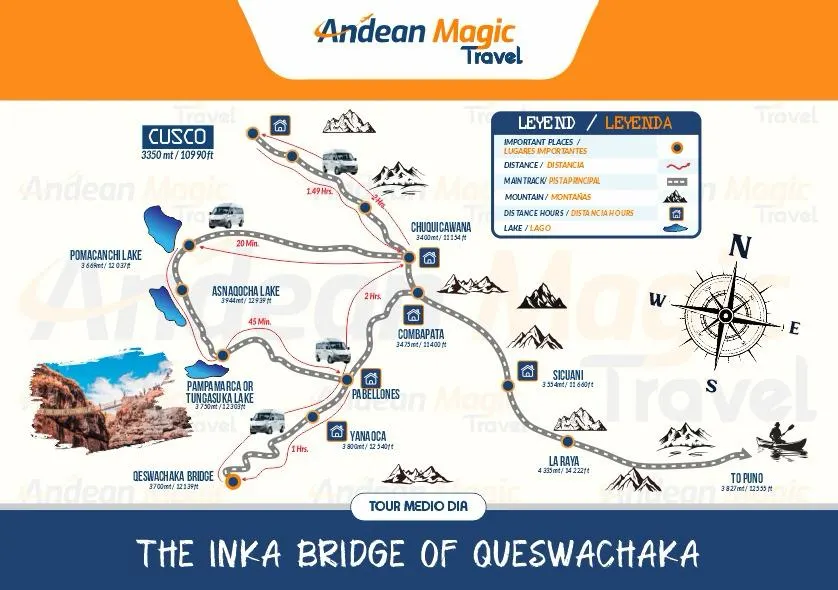
Route to the last Inca rope bridge, passing the Pomacanchi, Acopia, Asnaqocha and Pampamarca lakes.
What you should know
Included
- Private tourist transportation
- Professional bilingual guide
- Breakfast and lunch
- Mineral water
- First aid kit
Not included
- Site entrance fee
- Tips
- Craft purchases
Considerations
The Qeswachaka bridge was declared UNESCO Intangible Cultural Heritage of Humanity. It's important to respect the traditions and customs of the local community during your visit.
Entrance fees
| Ticket | Price | Where to pay |
|---|---|---|
| Qeswachaka bridge | Community fee | At the access point |
Approximate prices for a foreign adult. Paid in cash, in soles, and subject to change.
What to bring
Frequently Asked Questions
Quick answers to the most common questions about this tour.
Yes. It is safe, crossed on foot one at a time, and the guide accompanies you. Anyone who prefers can watch from the bank.
The second week of June, over three days, with the festival on the Sunday. If your trip coincides, we line up the date. The rest of the year the bridge stands and is crossed just the same.
Almost none: it is a few minutes from the vehicle to the bridge, with steps down to the bank.
About three and a half hours each way, with stops at the lakes on the way out and at Checacupe on the way back. About twelve hours in total.
No. The community charges it at the access point, in cash. Tips and craft purchases are not included either.
Why travel with Andean Magic?
No rush
We design itineraries with generous pacing, so you can truly immerse yourself and connect with Cusco.
Only your group
Private tours: no strangers, no crowded buses. Just you, your people and your guide.
Authentic experiences
We skip the tourist traps and show you living Andean culture and little-visited archaeological sites.
Total flexibility
Want to stop for a photo or stay longer at a site? It is your private tour: you control the clock.
Personalized care
From safety protocols to altitude tips, our local team looks after every step of your journey.
What our travellers say
Real reviews, verified by each platform. Read them in full, with each traveller's name and date.
Destination
More tours in Qeswachaka
Travel guides
Before you go to Qeswachaka
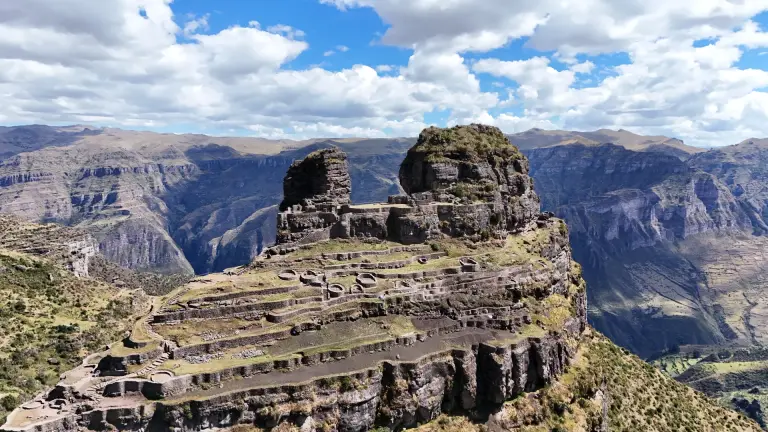
Looking for a fully customized experience?
We craft private tours around your schedule, comfort level and travel style. Your Peru trip starts here.
Design your private experience