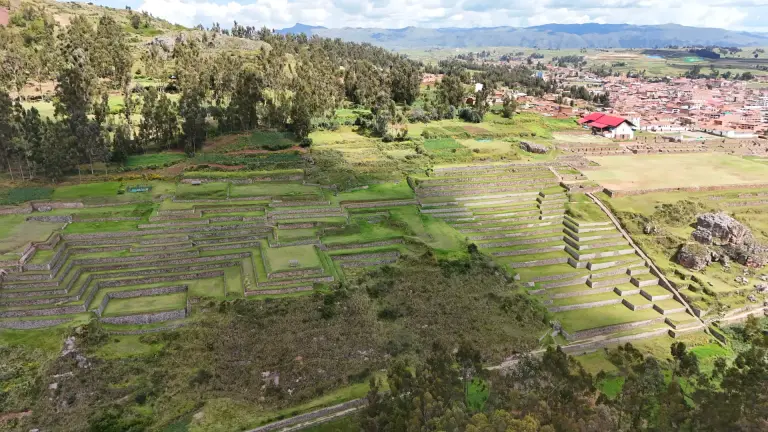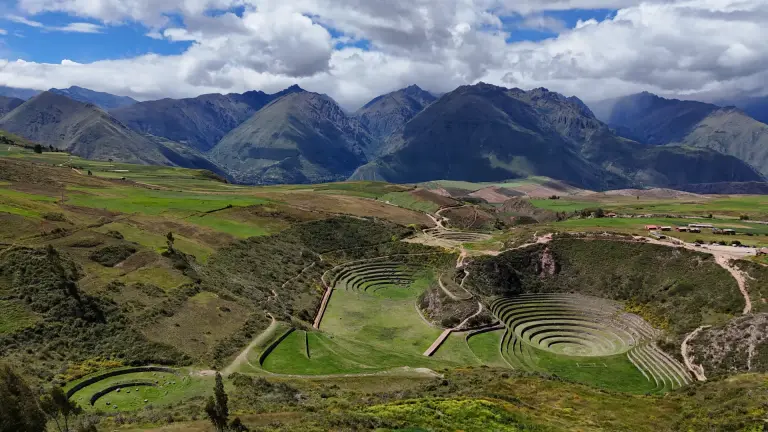
Sacsayhuaman is the first ruin almost everyone sees in Cusco and the one that impresses most: three rows of zigzag walls built from limestone blocks weighing tens of tonnes and fitted without mortar. It stands two kilometres from the Plaza de Armas, at about 3,700 metres, and takes a good hour to visit. This guide explains what it is, how to get there on foot or by taxi, which ticket you need and what time to go to have it almost to yourself.
What Sacsayhuaman is and why it matters
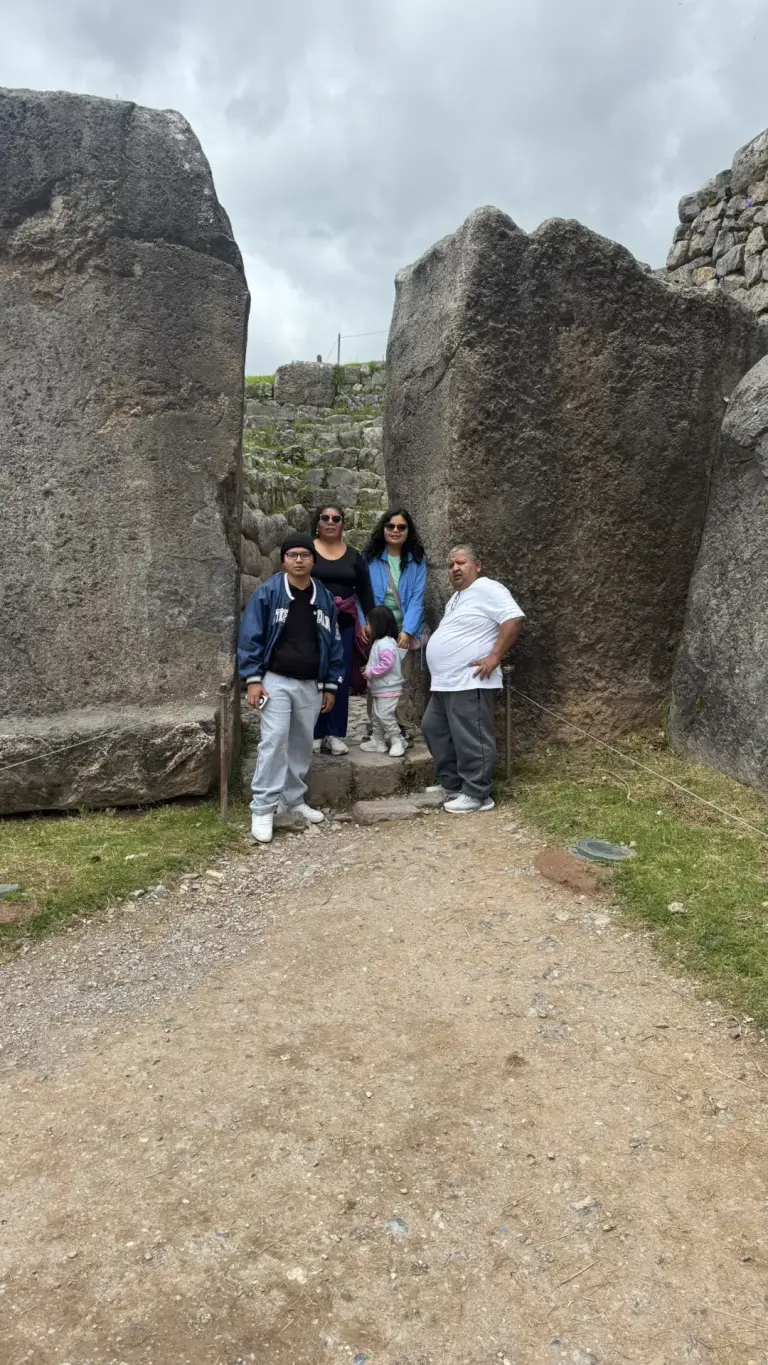
The chroniclers called it a “fortress”, and it is still presented that way, but it was above all a ceremonial centre dedicated to the Sun, built on the hill overlooking Cusco. Pachacutec began it in the 15th century and it was finished under Huayna Capac, in the 16th; thousands of people are thought to have worked on it over decades. On the upper terrace stood three towers, Muyucmarca, Paucamarca and Sallacmarca, of which only the foundations remain, because the Spanish dismantled most of the complex to build the city’s churches and mansions. What they could not move were the walls: the largest blocks stand over eight metres high and are estimated at more than a hundred tonnes.
In 1536 it was the scene of the decisive battle of Manco Inca’s rebellion against the conquistadors. Today it is where Inti Raymi, the festival of the Sun and Cusco’s largest ceremony, is celebrated every 24 June.
What to see inside
- The three zigzag walls. Around 400 metres long, stepped on three levels. The sawtooth shape multiplies the corners and makes the walls more stable in earthquakes.
- The twelve-angled stone is not here. It is on Hatun Rumiyoc street, in the city. What impresses at Sacsayhuaman is the size, not the number of angles.
- The esplanade. Between the walls and the hill opposite, this is where Inti Raymi is staged and where the llamas and alpacas in every photo graze.
- The Rodadero or Suchuna. An outcrop of polished rock with natural slides that children, and quite a few adults, still use.
- The chincanas. Short tunnels cut into the rock on the Rodadero side; the shorter ones can be walked through.
- The viewpoint over Cusco. From the upper level you see the whole city in its valley, with the Plaza de Armas in the middle. It is the best place to understand the puma shape that, according to tradition, Inca Cusco had.
How to get there from the Plaza de Armas
On foot
About two kilometres of steady climb, 30 to 45 minutes depending on your pace. The most direct route leaves by Calle Suecia, climbs the Resbalosa steps and passes the church of San Cristobal before reaching the entrance. Another option is up through San Blas and Calle Pumacurco. Both are steep: this is not a walk for the afternoon you arrive, with your body not yet adjusted to the altitude. If you walk, do it from the second day on and carry water.
By taxi
Ten to fifteen minutes and a fare of 10 to 15 soles from the centre. The taxi drops you at the main gate, next to the ticket window. Agree the price before getting in.
With the City Tour
The most comfortable way to fit it in: the Cusco Private City Tour visits Sacsayhuaman after Qorikancha and goes on to Q’enqo, Puka Pukara and Tambomachay, all by vehicle and in half a day. The article how to get to each City Tour site has maps for every stretch.
Ticket, opening hours and how long you need
Sacsayhuaman is visited with the Cusco Tourist Ticket, either the full version or the Circuit I partial, which also covers Q’enqo, Puka Pukara and Tambomachay and is valid for one day. There is no individual ticket. The park opens daily from seven in the morning to six in the evening, and the ticket is sold at the gate, in cash. To walk the walls, climb to the viewpoint and come down by the Rodadero you need between an hour and an hour and a half.
Best time to visit
City Tour groups arrive mid-morning and again mid-afternoon. If you want the site to yourself, go in at opening time, when the light falls sideways on the walls and there is still dew on the esplanade, or after four, when the sun drops and the stones turn golden. At midday the light is flat and there is little shade. In the rainy season, December to March, mornings are usually clear and storms arrive in the afternoon.
What to bring
- Sunscreen, hat and sunglasses: at 3,700 metres the sun burns in twenty minutes, even under cloud.
- Water and something to eat; there are no shops inside the park.
- A warm layer, because the wind blows on the upper level even when the city is warm.
- Shoes with grip: the steps and the Rodadero are slippery after rain.
- Your passport, together with the Tourist Ticket.
Frequently asked questions
How is Sacsayhuaman pronounced?
“Sak-sai-wa-MAN”, with the stress on the last syllable. You will also see it written Saqsaywaman or Sacsayhuamán; it is the same place.
Can I visit without a guide?
Yes, and many people do. But the site has no information panels, and without someone to explain what the towers were or how the stones were moved, the visit stays at the level of photographs. If you go independently, at least climb to the viewpoint.
Is it suitable for children and older people?
Yes. There are steps and slopes, but short ones; the lower part of the walls can be walked almost on the flat. The Rodadero is children’s favourite spot.
Is it included in the Tourist Ticket?
Yes, in both the full ticket and the Circuit I partial. It is the only way in.
Can you walk from Cusco to Sacsayhuaman?
Yes. It is about two kilometres of steady climb from the Plaza de Armas, 30 to 45 minutes, via Calle Suecia and the Resbalosa steps or via San Blas and Calle Pumacurco. It is steep: best from your second day and with water.
How much time do you need at Sacsayhuaman?
An hour to an hour and a half to walk the walls, climb to the viewpoint and come down by the Rodadero.
What is the altitude of Sacsayhuaman?
About 3,700 metres, some 300 metres above the Plaza de Armas. The altitude of every place is in our Cusco altitude guide.
What was Sacsayhuaman?
Above all a ceremonial centre dedicated to the Sun, although the chroniclers called it a “fortress”. Pachacutec began it in the 15th century and it was finished under Huayna Capac.
Is Sacsayhuaman worth visiting?
Yes: its zigzag walls have blocks over eight metres high and more than a hundred tonnes, fitted without mortar, and from the viewpoint you see the whole city. Together with Qorikancha, it is the best introduction to Inca architecture.
Follow the route
- Cusco Private City Tour: Sacsayhuaman and the other four stops in half a day.
- How to acclimatise in Cusco, before walking up.
- All our Cusco city tours.